
AppFold.ai
A platform for personal software
A platform for personal software
Educational programming & robotics game
Technical Writing (Medium)
Technical Writing (Medium)

Technical Writing (Medium)

Play Store and AppStore
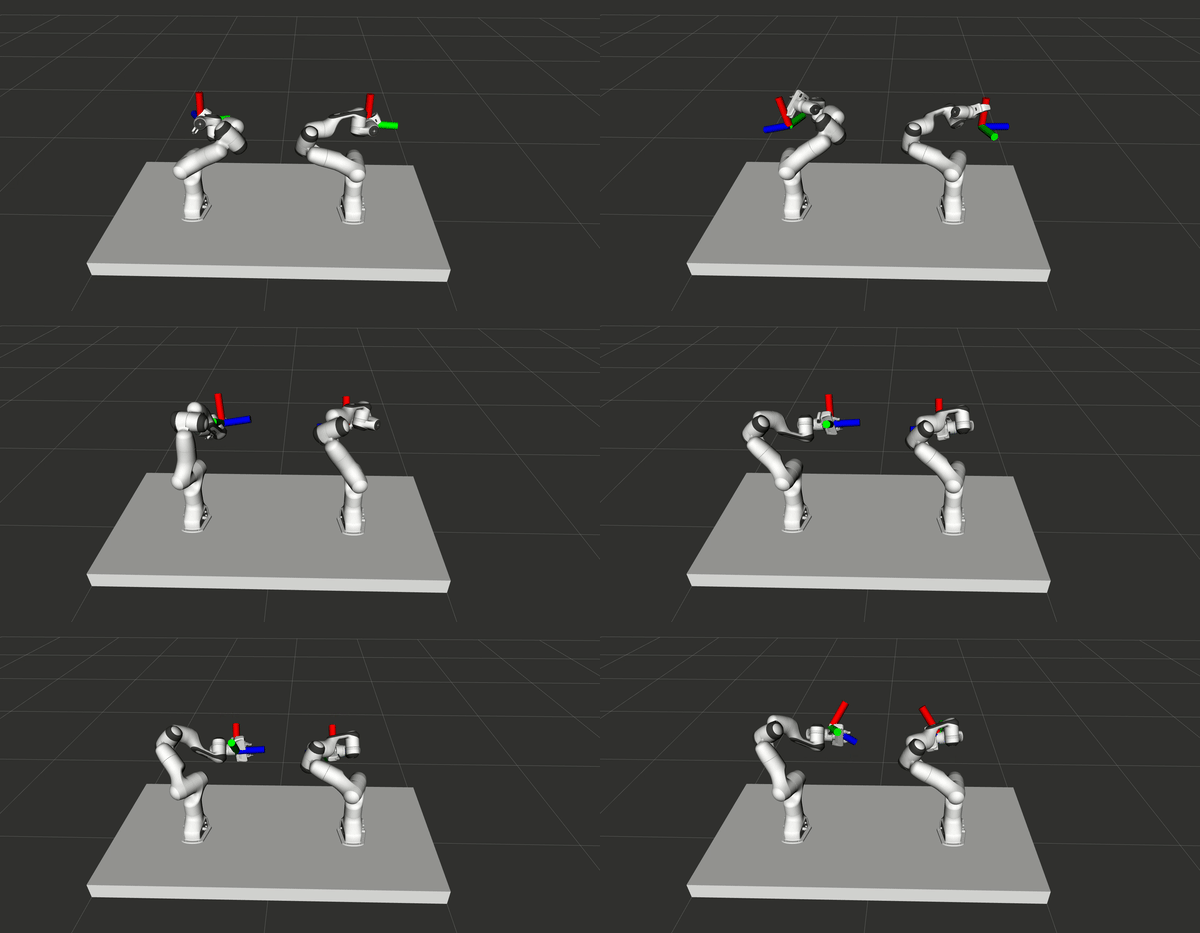
VR control for bimanual robots
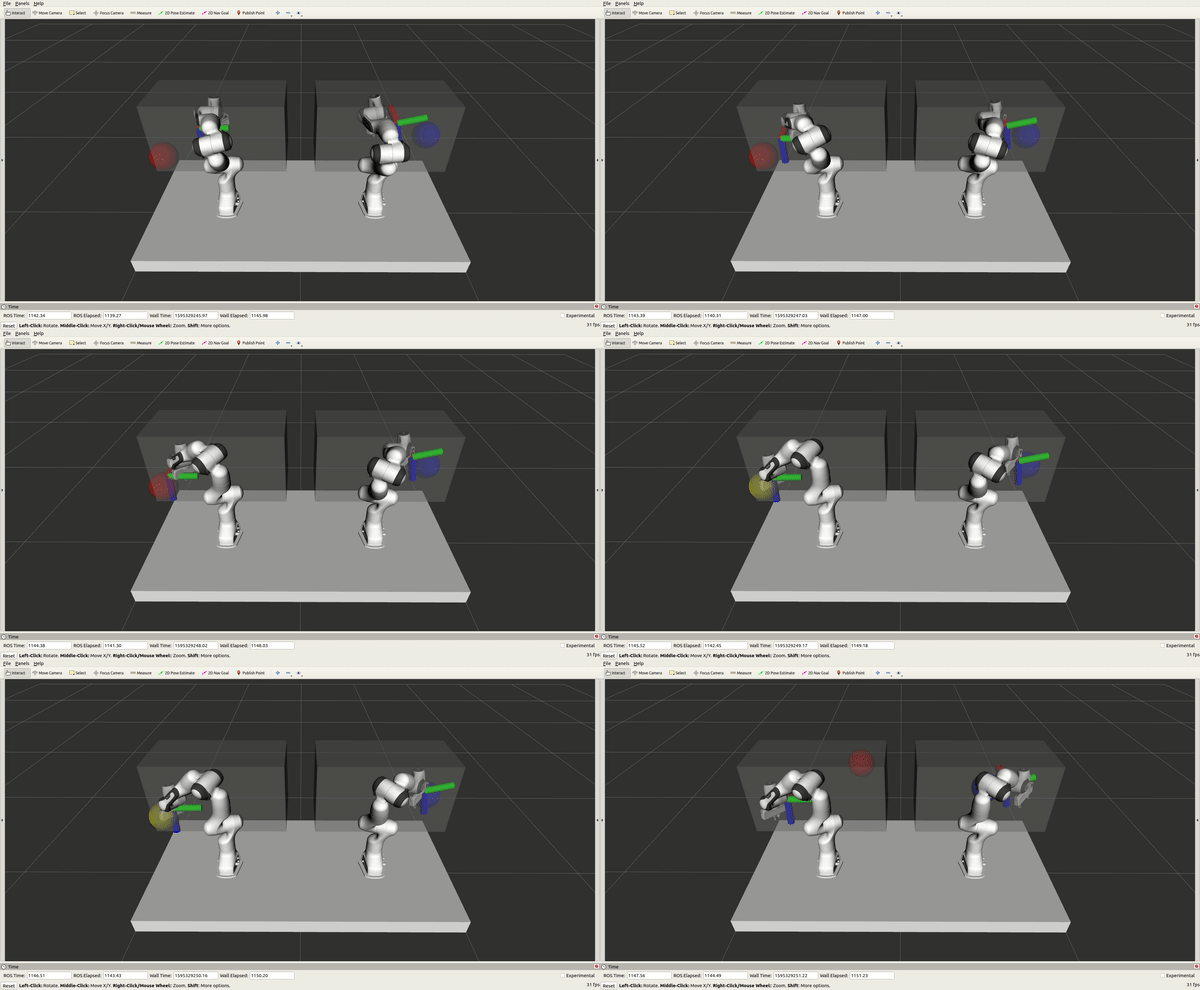
Experimenting on moveit_vive
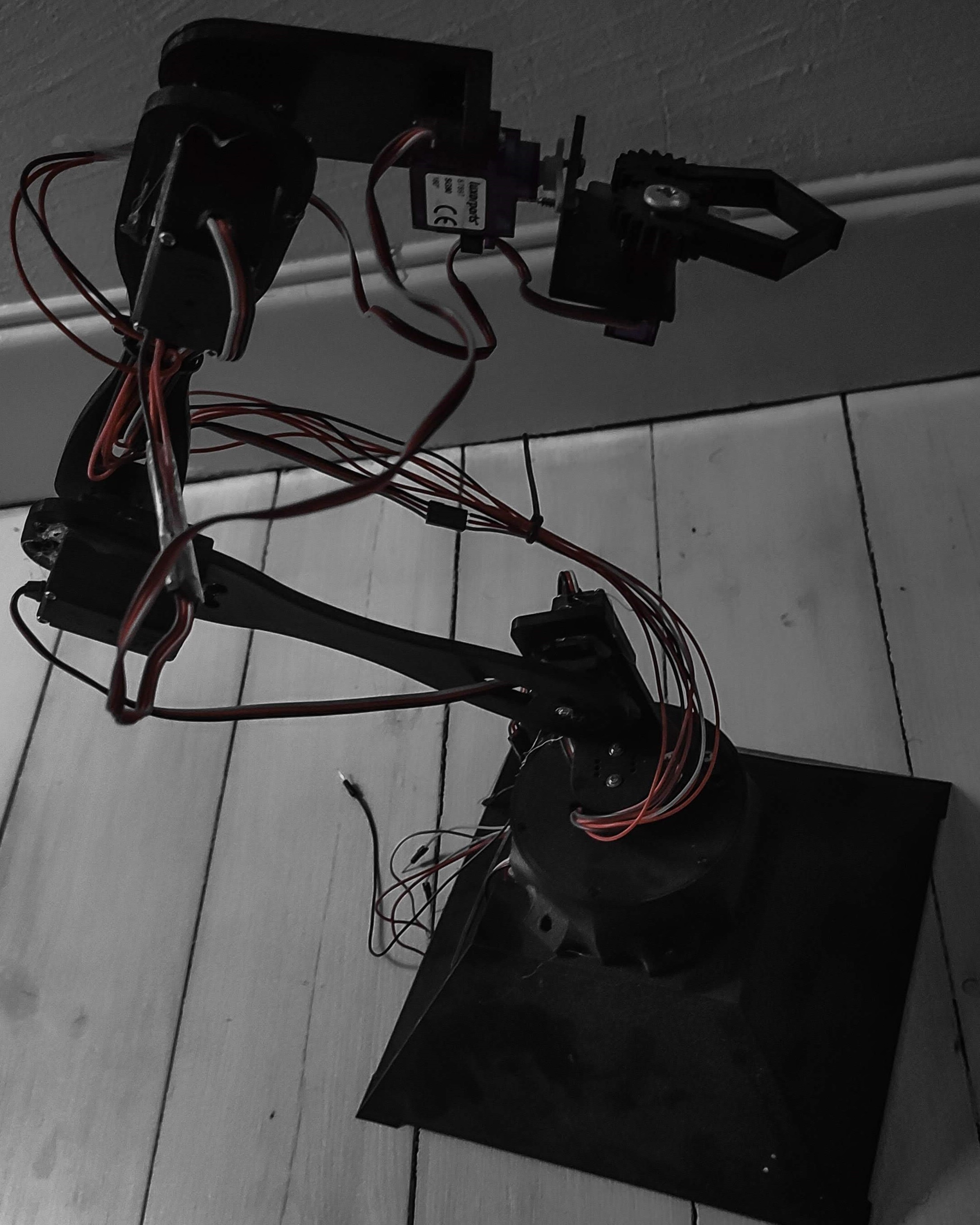
Custom built robotics arm using 3D printing, Raspberry Pi, Arduino and ROS
I'm the founder of AppFold.ai and work on it full time. AppFold is a platform for personal software: small apps built in plain language and shared with exactly the people who need it, whether that's a family, a club or a work team.
AppFold was one of ten teams selected for the Startup SuperNova accelerator run by KLAK – Icelandic Startups, Nova and Huawei.
Before that, I led Hefring Marine's project in the NATO DIANA 2026 programme, one of only 15 companies chosen in the maritime domain from over 3,600 applicants worldwide, building machine learning pipelines for radar-based object detection and classification. The project was a success, and Hefring was selected for DIANA's even more selective Mission Track.

Building AppFold, a platform for personal software, built in plain language and shared with exactly the people who need it. Selected for the Startup SuperNova accelerator.

Led development of Hefring's NATO DIANA 2026 project, selected from over 3,600 applicants in the maritime domain. Built ML pipelines for radar-based object detection and classification, and integrated radar hardware into the embedded software stack. The project was a success, and Hefring was selected for DIANA's even more selective Mission Track.
Developed and optimised embedded software for Hefring's Intelligent Marine Assistance System (IMAS), enabling reliable real-time processing on edge computers aboard marine vessels. Integrated sensors, navigation equipment, and other onboard hardware into the software stack, and travelled internationally to install systems on customer vessels.

Travelshift powers travel booking platforms across Europe, including Guide to Iceland and Guide to Europe. Worked on the AI team's automatic trip generation algorithm, building systems that compose personalised multi-day itineraries across European destinations at scale.

ATTA Technologies is a motion-capture platform that translates human body movement into actionable data for sports analytics and interactive applications. Developed the skeleton pose estimation and body movement detection models powering gesture-based gameplay, similar in concept to Kinect. Also wrote low-level hardware drivers for peripheral components interfacing with the platform.

RaSpect uses AI-powered computer vision to automate safety inspections of buildings and built infrastructure. Built the core detection engine, an ensemble of multiple vision models working together, along with an image and video stitching pipeline for long continuous recordings of building facades, including challenging cases involving reflective surfaces and visually repetitive materials.

One of ten teams selected from a record number of applicants for the six-week accelerator run by KLAK – Icelandic Startups, Nova and Huawei. AppFold is a platform for personal software.
Abstract
With computers being used for more applications where commands can be spoken it is
useful to find algorithms which can separate voices from each other so that software
can turn spoken words into commands. In this paper our goal is to describe how
Independent Component Analysis (ICA) can be used for separation of voices in cases
where we have at least the same number of microphones, at different distances from
the speakers, as speakers whose voices we wish to separate, the so called "cocktail
party problem". This is done by implementing an ICA algorithm on voice recordings
containing multiple persons and examining the results. The use of both ICA
algorithms result in a clear separation of voices, the advantage of fastICA is that
the computations take a fraction of the time needed for the ML-ICA. Both algorithms
can also successfully separate voices when recordingsare made by more microphones
than speakers. The algorithms were also able to separate some of the voices when
there were fewer microphones than speakers which was surprising as the algorithms
have no theoretical guarantee for this.
Abstract
A control system used to control two Panda Franka Emika robots online and
simultaneously with two HTC Vive controllers is presented, with the primary purpose
of demonstrating tasks for robots. The system is validated by learning from
demonstration/imitation learning task via Principle Component Analysis (PCA). The
task consists of learning different bimanual movement patterns e.g. for drawing
sketches, with latent variables that then can be manipulated by the user to generate
new shapes of similar structure. Tasks of various correlations between the arms are
tested and compared. The system uses components and adaptations e.g. preexisting
modules for sensing, communication, motion planning, etc. to realize the goal of
modularity and support for other robots than the one used in this thesis. The most
prominent systems used are the Robot Operating System (ROS) for the base framework
for handling packages and sending information between different parts of the system,
and MoveIt’s planning library (running on ROS) for managing kinematics and
collision.